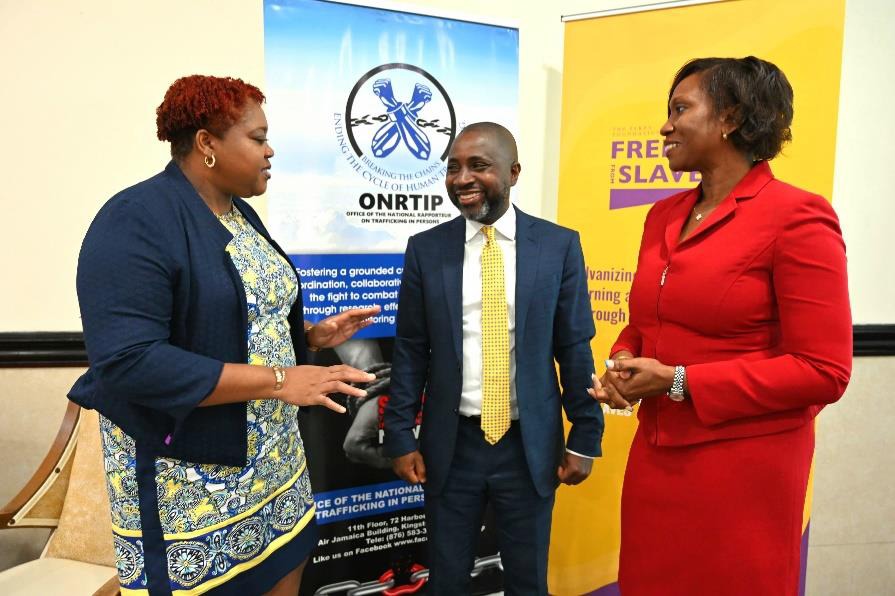

Chief Technical Director in the Ministry of National Security, Shauna Trowers says public-private partnerships are critical in the fight against human trafficking.
“Whether it is strengthening legal frameworks, raising awareness, providing support services for survivors, or promoting economic opportunities and social empowerment for vulnerable communities – we must collectively leverage our cultural resources to prevent exploitation of our most vulnerable”, she explained.
The Chief Technical Director was delivering remarks on behalf of Permanent Secretary and Chair of the National Taskforce Against Trafficking in Persons, Ambassador Alison Stone Roofe, on day two of the 2024 Freedom from Slavery Caribbean Regional Forum at the Jamaica Pegasus Hotel in Kingston, today (May 21).
She further added that a collaborative approach between government and civil society will provide a wide-range of support to victims and survivors.
“Partnerships are crucial towards strengthening victim identification and referral systems and victim-centred approaches as survivors of human trafficking require specialised support services,” she noted.
She further pointed out that victims and survivors of human trafficking will require support services such as shelter, safe space for protection, counselling, medical services, legal aid and reintegration programmes.
The Chief Technical Director told the Conference that the insights and experiences shared are not just words but “they are seeds of change that have the potential to bloom into a future where human trafficking is fully eradicated, and every individual is treated with dignity and respect.”
Despite the challenges that Caribbean countries face to tackle human trafficking, they have made strides in the development of comprehensive anti-human trafficking policies and legislation such as the United Nations Protocol to Prevent, Suppress and Punish Trafficking in Persons.
“These frameworks prescribe penalties for perpetrators and provide a legal foundation to support prevention, protection, and prosecution efforts and have enhanced law enforcement capabilities to investigate trafficking cases,” she pointed out.
She further added: “In some instances, these actions are further strengthened where specialised units or task forces are established within law enforcement agencies to focus on combating human trafficking”.
Trowers urged the Conference to “continue to explore opportunities to bolster these frameworks to address new and emerging trends such as online and technology facilitated human trafficking in the region by exploring and sharing our experiences on the operational and legal challenges in detecting, investigating and prosecuting this method of exploitation”.
Photos
View album in the Gallery →